Most advice on how to improve your meal prep assumes the problem is motivation. It isn’t. If you already cook in batches, you’ve solved motivation. The three things that actually break a meal prep habit are repetition, storage and time. You get bored by Thursday. Half a tray of roasted vegetables goes slimy at the back of the fridge. Sunday disappears into chopping onions.
I’ve prepped this way for years, and the changes that stuck were never dramatic. They were small fixes aimed at one failure at a time. Here’s how to improve your meal prep by treating each of those three problems as its own puzzle, plus a lighter midweek routine for the days when a full Sunday session isn’t happening.
Fix One: You’re Bored by Thursday
Boredom is a variety problem wearing a motivation costume. The usual fix is to cook more different meals on Sunday, which just makes the time problem worse. The better fix is to stop treating Sunday as the moment when flavour gets decided.
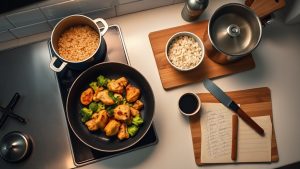
Cook components, not finished dishes. A tray of plain roasted chicken thighs, a pot of lentils, a batch of rice and a pile of roasted peppers can become a grain bowl on Monday, a wrap on Tuesday, a soup on Wednesday and a traybake on Thursday. Same Sunday effort as cooking one big chilli, four different dinners. The trick is keeping the base neutral and adding the personality at the point of eating.
That means your fridge needs a small arsenal of finishing moves. A jar of chilli crisp. Tahini loosened with lemon and water. A herb oil blitzed from whatever’s wilting. Yoghurt with garlic and salt. Pickled onions you made in ten minutes while the oven was on. None of these take real time, and any one of them can make the same chicken taste like a different meal.
It also helps to change texture, not just sauce. The same lentil base is a salad when it’s cold and crunchy, a stew when it’s hot and brothy, and a dip when it’s blended. Freeze half the batch in a flat bag and you’ve bought yourself a week off from that flavour entirely.
One more thing: stop prepping five identical lunches. Prep three, and leave two days open for leftovers, a sandwich, or whatever the week throws at you. Rigid plans break. Flexible ones bend.
Fix Two: Food Is Going in the Bin
Waste almost always comes down to three culprits: wet greens, crowded containers and cooking more than you’ll realistically eat before it turns.
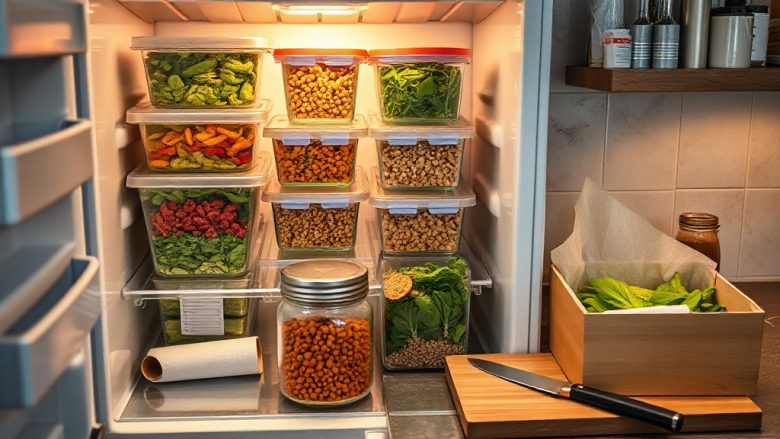
Wet is the big one. Any leaf or roasted vegetable that goes into a container damp will be sad within two days. Spinach, rocket and herbs need to be dry before they’re stored. A salad spinner is worth the cupboard space, and if you don’t have one, a clean tea towel and a gentle shake does most of the job. Line the container with paper towel, leave a little breathing room, and don’t seal leafy things while they’re still warm.
Crowding matters more than people think. A container packed to the lid traps moisture and speeds up decay. Fill to about three-quarters and you’ll get noticeably more life out of everything. Glass helps because you can see what’s in there, which sounds trivial until you’ve thrown out the fourth unidentified tub of something brown.
Then there’s the quantity question. If you cook for four but only eat lunch at home three days a week, you’re prepping for a fantasy version of your week. Track what actually gets eaten for two weeks, then scale your batches to that number. It feels obvious written down. Almost nobody does it.
Freeze deliberately rather than accidentally. The moment a batch is cooked, portion out what you’ll eat in the next three days and freeze the rest in labelled bags laid flat. Flat bags stack, thaw fast and don’t leave you guessing. A strip of masking tape with the contents and the date written on it takes five seconds and saves a lot of sniffing.
Fix Three: Sunday Is Eating Your Whole Afternoon
The single biggest time sink in meal prep is chopping things that don’t need chopping, followed closely by cooking things one at a time.
Use the oven for more than you currently do. While it’s on, it can roast vegetables, bake chicken, cook a tray of halloumi, toast nuts and soften tomatoes. One oven, one temperature, one timer. If something needs a different temperature, either accept the compromise or put it in later. Perfect browning is not the goal on a Sunday.
Stop dicing onions into uniform little cubes. For most dishes, rough chunks cook the same and taste identical. Save the knife skills for the meals where they matter. The same goes for carrots, peppers and courgettes — batons and rough slices are fine.
Buy pre-prepped where it genuinely saves time without costing much. Bagged slaw, washed leaves, frozen chopped onion, pre-minced garlic. There’s a purist argument against all of it, and it’s wrong. If a £1 bag of chopped onion buys you twenty minutes, that’s a good trade.
Clean as you go, and start with a clear sink. A mountain of washing up at the end makes the whole session feel twice as long as it was. Fill the sink with hot soapy water before you start cooking, and anything that finishes early goes straight in.
Finally, cap the session. Give yourself ninety minutes and work to it. Most of us expand the task to fill the time available, and a hard stop forces decisions about what actually matters. If something doesn’t get done, it probably didn’t need doing.
The Midweek Top-Up That Keeps Everything Fresh
A full Sunday session is not the only valid shape for meal prep. A twenty-minute top-up on Wednesday evening does more for the second half of your week than any amount of extra Sunday effort.
The routine is simple. Check what’s left, then cook one fresh thing to carry you to Friday. A pot of rice, a tray of roasted vegetables, a pan of quick-cooked protein, or a big chopped salad that holds up for two days. That’s it. One thing.
This is also the moment to deal with anything that’s about to turn. Wilted spinach goes into a frittata. Soft tomatoes become a quick sauce. Sad herbs become a dressing. You’re not cooking from scratch, you’re redirecting what’s already there.
Pair the top-up with a ten-minute fridge audit. Move older containers to the front, check the dates on your labels, and pull anything for the freezer that won’t get eaten. It’s a small habit and it’s the difference between a fridge that feeds you and a fridge that quietly fills with regret.
If you do this consistently, Sunday shrinks. You stop cooking for the whole week in one go and start cooking for the next three days, topping up as you go. Less waste, less boredom, less time. That’s the whole point.
Frequently Asked Questions
How do I stop getting bored with the same meals every week?
Cook neutral components and flavour them at the point of eating, rather than cooking four different finished dishes on Sunday. A jar of chilli crisp, a lemon tahini dressing or a quick herb oil can turn the same base into something that tastes new. Changing texture helps too — the same lentils work cold and crunchy, hot and brothy, or blended into a dip.
Why does my prepped food go off so quickly?
Moisture is usually the cause. Dry your leaves properly before storing them, don’t seal containers while food is still warm, and leave some breathing room instead of packing to the lid. Cooking smaller batches and freezing the excess deliberately, rather than leaving it all in the fridge, solves most of the rest.
How long should meal prep actually take?
Ninety minutes is a realistic cap for a weekly session if you use the oven for multiple things at once, chop roughly rather than precisely, and buy pre-prepped shortcuts where they save meaningful time. Add a twenty-minute midweek top-up and you’ll cover the week without losing an afternoon.
Is it better to prep full meals or just components?
Components give you more flexibility and less boredom, because you assemble meals fresh rather than reheating the same finished dish four times. Full meals work better if your week is genuinely unpredictable and you need something you can grab and eat without thinking. Most people do best with a mix of both.