The formula is protein plus base plus fast vegetable plus sauce. That’s it. Pick one from each column, cook the protein and vegetable while the base boils or warms, spoon over a sauce you already have, and eat. The rest of this post explains how to run that formula without thinking, so you can stop opening the fridge at 6pm and hoping something will present itself.
Knowing how to get started with weeknight dinners isn’t about becoming a better cook. It’s about removing decisions. Most weeknight failure isn’t lack of skill, it’s the forty minutes lost to negotiating with yourself about what to make. A fixed formula kills that negotiation. You stop asking what sounds good and start asking which four things are in the kitchen.
The Four Parts of the Formula, and How to Choose Them
Each part does a job. Protein makes it filling. Base makes it a meal rather than a plate of toppings. Fast vegetable adds volume and something fresh. Sauce stops it tasting like hospital food. If you have all four, you have dinner. If you have three, you have a worse dinner but still dinner.
Protein: pick one, cook it the same way every time
Choose proteins that cook in under fifteen minutes from the state you buy them in. Chicken thighs, chicken breast, pork chops, sausages, firm tofu, eggs, tinned beans, frozen prawns, salmon fillets. That’s a full rotation. Buy two or three types a week, not five.
The trick is to stop varying your technique. Diced chicken thighs get the same treatment every time: hot pan, salt, seven minutes, flip once. Sausages go under the grill. Tofu gets pressed, cubed, and fried until the edges go brown. Eggs get scrambled or fried. You are not looking for variety in method, only in what you put on the plate.
Base: whatever is already in the cupboard
Pasta, rice, couscous, flatbreads, potatoes, noodles, or a bag of salad leaves. Keep three of these stocked at all times and you will never be stuck. Rice and pasta cover most nights. Flatbreads cover the nights when you cannot face another pan. Potatoes take longer, so treat them as a weekend option or microwave them and finish in the pan.
Portion by eye rather than by instruction. A handful of dry pasta per person, a mug of rice for two, one flatbread each. Precision here doesn’t improve the meal, it just slows you down.
Fast vegetable: the part most people skip
Fast means it’s done in ten minutes or less. Tenderstem broccoli, green beans, frozen peas, spinach, courgette, peppers, cherry tomatoes, spring greens, asparagus in season. Frozen vegetables count. Nobody is judging the freezer bag.
Two rules. First, cook the vegetable in the same pan as the protein wherever possible, added near the end, so you’re not washing two pans. Second, always cook more than you think you need. Vegetables shrink and you’ll want the leftovers.
Sauce: buy it, don’t build it
This is where people overcomplicate weeknights. You do not need to reduce anything. Keep four sauces in the cupboard and one in the fridge: soy sauce, chilli crisp or hot sauce, a jar of pesto, a jar of tomato pasta sauce, and mayonnaise or yoghurt. That’s five and it covers almost everything.
A squeeze of lemon, a knob of butter, or a spoon of mustard also counts as a sauce if you’re honest about it. The sauce’s only job is to make the plate taste like you meant it.
Equipment and Shopping: The Minimum You Actually Need
You can run this formula with less equipment than you’d expect. One large frying pan or sauté pan with a lid. One medium saucepan. One baking tray. One sharp knife and a chopping board. A wooden spoon and a spatula. That’s the whole kit. A lid matters more than people realise because it lets you steam vegetables in the same pan as the protein without adding another pot.
If you own a slow cooker or an air fryer, they slot in fine, but neither is required. Don’t buy anything new until you’ve run the formula for two weeks and know what’s actually annoying you.
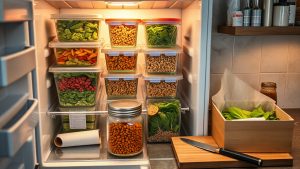
The shopping list is short on purpose. Buy one or two proteins, one base in bulk, two or three fast vegetables, and check your sauce supply. That’s a ten-minute shop. It fits in one bag and it doesn’t require a meal plan spreadsheet.
My own Sunday routine takes about ten minutes. I look at the week, pick three proteins and three vegetables, note which nights I’ll be home late, and write four meals on a scrap of paper. Four, not seven. Two nights a week will go sideways, whether that’s leftovers, a late finish, or someone wanting toast. Planning for seven sets you up to fail on Wednesday. Planning for four means you’re ahead.
One more rule that saves more time than any gadget: if a recipe has more than six ingredients, it doesn’t go on a weeknight. Six includes oil and salt. That single filter removes almost every recipe that will quietly eat your evening.
A worked example: Tuesday night in about twenty minutes
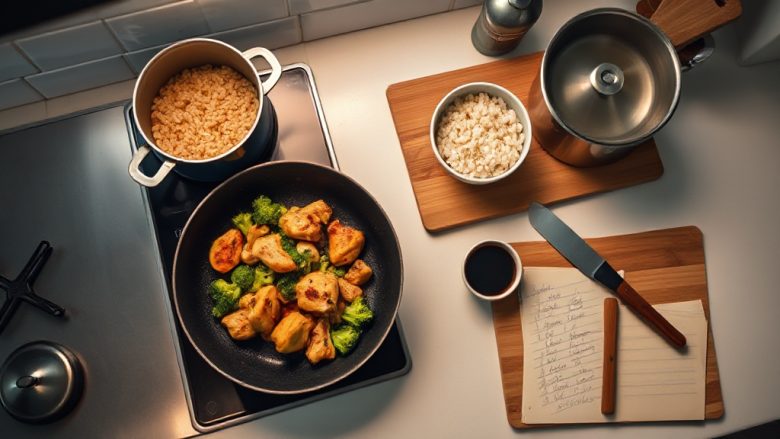
Here’s how the formula runs in practice. It’s Tuesday, you’re home at half six, and you have chicken thighs, a bag of rice, a head of broccoli, and soy sauce.
Put the rice on first, because it takes the longest and needs no attention. While it comes to a boil, cut the chicken thighs into rough chunks and get them into a hot pan with a pinch of salt. Leave them alone for a few minutes so they brown instead of steam. Cut the broccoli into florets. Once the chicken has colour on one side, turn the pieces, add the broccoli, splash in a couple of tablespoons of water, and put the lid on. The steam cooks the broccoli in four or five minutes.
When the rice is done, drain it and put it in bowls. Tip the chicken and broccoli on top. Pour over soy sauce, add chilli crisp if you want heat, and eat. One pan and one saucepan. Roughly twenty minutes, most of which is waiting.
Swap the components and you get a different dinner from the same method. Sausages, potatoes and green beans with mustard. Tofu, noodles and peppers with soy and a squeeze of lime. Prawns, couscous and courgette with pesto. Same four parts, same order of operations, different plate. After two weeks you stop reading the formula and just cook it.
Frequently Asked Questions
How many weeknight meals should I plan each week?
Plan four. Five if you’re optimistic. Leaving gaps for leftovers, takeaway, or a night when nobody wants what’s on the list is not laziness, it’s the reason the plan survives past Wednesday. A plan that assumes seven perfect evenings will collapse the first time something goes wrong.
What if I don’t like cooking the same things repeatedly?
You’re not repeating meals, you’re repeating a method. The formula gives you dozens of combinations from the same short shopping list. Change the sauce and the same chicken and rice becomes a different dinner. Change the base and it becomes another one. The technique stays fixed so your brain doesn’t have to work at 6pm.
How long should a weeknight dinner actually take?
Aim for thirty minutes from walking into the kitchen to sitting down. Most of the formula fits in twenty. If a meal regularly takes longer than forty minutes on a weeknight, it belongs on a weekend, not in your Tuesday rotation. Be honest about which recipes keep landing past that line and drop them.
Do I need to meal prep on Sunday for this to work?
No. Ten minutes with a pen is enough. Full meal prep is a different approach and it works for some people, but it isn’t required to make this formula function. What matters is that you know which four meals you’re cooking and that the ingredients are in the house. Chopping everything in advance is optional and, for most people, the first thing to get abandoned.