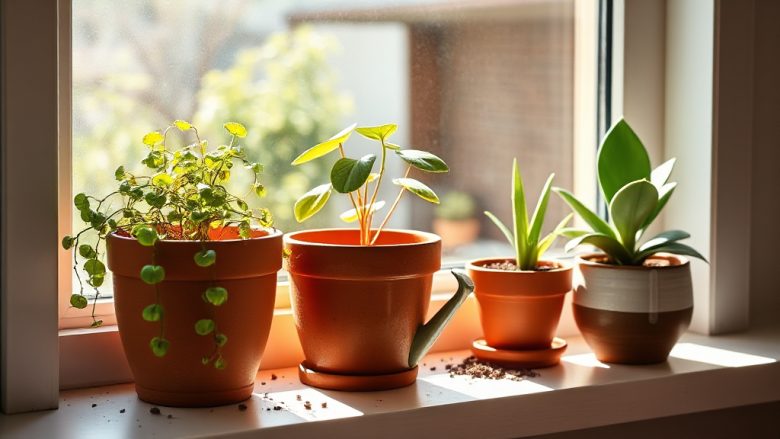
Most pot plants don’t die from bad luck. They die from watering. I’ve killed more plants than I’ve kept alive, and almost every corpse came down to the same two problems: I watered on a schedule instead of checking the soil, and I planted into pots with nowhere for the excess water to go. That’s it. Light and drainage decide almost everything, and once you’ve sorted those, the plant itself matters far less than the internet would have you believe.
So before you pick anything from this list, answer two questions. First, how much direct sun does your spot actually get? Not how much you’d like it to get — sit there at midday and count the hours. Second, does your chosen pot have a drainage hole, and can you empty the saucer underneath it? If the answer to the second one is no, fix that before you spend money on a plant.
What follows are the easy plants to grow in pots that I now recommend to friends who have never kept anything alive. I’ve grouped them by light level, because that’s the thing you can’t change by trying harder. Each entry lists the pot size, the watering rhythm and the one mistake that kills it most often.
Low light, low drama: plants that forgive a dark corner
If your only spot is a north-facing windowsill or a room with a small window, don’t fight it with a sun-lover. Pick from these instead.
Snake plant. A 15–18cm pot is plenty for a young plant, and it will happily sit in that size for two or three years. Water it when the top 5cm of compost is bone dry — in a dim room that can mean every three or four weeks in winter. The common mistake is watering it like a normal houseplant. It’s a succulent in disguise and rots fast in wet soil. Use a gritty mix, not standard multipurpose compost straight from the bag.
Spider plant. Slightly brighter than a snake plant but still tolerant of shade, and it tells you when it’s unhappy by browning at the tips. A 15cm pot suits a small plant; move it up one size when roots appear at the drainage hole. Water when the surface feels dry to the touch, roughly weekly in summer and fortnightly in winter. The mistake here is using a pot that’s too big. Spider plants like being slightly snug, and an oversized pot keeps the compost wet around roots that aren’t there yet.
Pothos, or devil’s ivy. The most forgiving trailing plant I’ve owned. A 15cm pot on a shelf or in a hanging basket works well, and it’ll cope with anything from a shady corner to bright indirect light. Water when the top couple of centimetres dry out — every 7–10 days in summer. The mistake is letting it sit in a full saucer. It tolerates a lot, but not permanently soggy roots.
Bright but no direct sun: the sweet spot most homes have
This is the easiest light level to work with, and it’s where most of my surviving plants live. A metre or two back from a south or west window, or right at an east window, counts.
Peace lily. It droops dramatically when thirsty and perks up within hours of a drink, which makes it a good teacher for anyone learning to read soil rather than calendars. A 20cm pot suits a supermarket-sized plant. Water when the leaves just start to flag, usually weekly. The mistake is panicking at the droop and watering twice. Check the compost first — if it’s already damp, the problem is something else.
Philodendron. Similar care to pothos but with bigger, glossier leaves. A 20cm pot for a bushy plant, and it’ll want repotting every couple of years. Water when the top 3–4cm are dry, roughly weekly. The mistake is putting it in direct midday sun, which scorches the leaves and looks like disease.
Sunny windowsills: plants that want the light
If you’ve got four or more hours of direct sun, congratulations — you can grow things that flower. Just remember that sun means faster drying, so pots need checking more often.
Aloe vera. A 15–20cm terracotta pot is ideal because the clay wicks moisture away. Water thoroughly, then let it dry out completely — every two to three weeks in summer, less in winter. The mistake is watering little and often. Aloes want a proper soak followed by a proper drought, not a permanent drizzle.
Geraniums, or pelargoniums. These will flower for months on a sunny sill or balcony. A 25cm pot per plant gives roots room to spread. Water when the top few centimetres dry, which in full summer sun can be every two or three days. The mistake is overfeeding. Too much fertiliser gives you enormous leaves and almost no flowers.
Jade plant. Another succulent that shrugs off neglect. A 15cm pot is fine for years, and it prefers to be root-bound. Water when the soil is dry all the way through. The mistake is moving it into a bigger pot too early, which slows growth and risks rot.
Pot size, drainage and the watering rhythm that actually works
Almost every failure I’ve had traces back to one of three things, and none of them are about the plant.
Drainage first. Every pot needs at least one hole, and the saucer beneath it needs emptying after you water. A pot without drainage is a bucket, and roots drown in buckets. If you’ve fallen for a decorative pot with no hole, use it as a cover and keep the plant in a slightly smaller plastic pot inside it, lifting it out to water.
Pot size second. Match the pot to the root ball, not to the space you want the plant to fill. A small plant in a big pot sits in wet compost it can’t drink from, and that’s how root rot starts. Move up one size at a time, usually every year or two.
Watering third, and this is the one worth unlearning. Forget weekly schedules. Push a finger into the compost up to the first knuckle. If it’s damp, wait. If it’s dry, water until it runs out of the bottom, then stop. In summer you might water twice a week; in January, once a fortnight. The plant doesn’t know what day it is.
One more thing worth knowing: compost in pots runs out of nutrients. After about six weeks, start feeding with a diluted liquid feed every couple of weeks through spring and summer. Stop in winter, when most of these plants are barely growing anyway.
A three-plant starter combo that covers almost any home
If you’d rather not choose, here’s the combination I’d hand a first-time grower. It gives you three different light tolerances, so at least two will thrive wherever you put them, and all three forgive a missed watering.
Start with a snake plant in a 15cm pot for the darkest corner you’ve got. Add a pothos in a 15cm hanging pot for a shelf near a window, where it’ll trail and grow visibly enough to feel rewarding. Finish with an aloe in a 15cm terracotta pot for the sunniest sill. Three pots, three different watering rhythms, and no shared pest problems to worry about.
Buy them in spring if you can. Roots establish faster in warm weather, and a plant that settles in well during its first summer will survive its first winter far more easily. Check the compost before you water, empty the saucers, and resist the urge to repot anything in autumn.
That’s really the whole trick. Pick plants that match your light, give them drainage, and water when the soil asks for it rather than when the calendar does. Do that and you’ll be the person your friends ask for plant advice — which, speaking from experience, is a strange and slightly undeserved feeling.